You have probably seen fulvic acid listed on supplement labels. You may have even seen it marketed as a superfood or a detox agent. Almost everything you have read about it misses the point. Fulvic acid is not a nutrient. It is a transport mechanism — and understanding the difference changes how you think about every mineral supplement you have ever taken.
Table of Contents
- What Fulvic Acid Actually Is
- How Fulvic Acid Works at the Cellular Level
- Why Standard Mineral Supplements Fail Without It
- Fulvic Acid in Shilajit vs Isolated Fulvic Acid Supplements
- The Scientific Evidence
- Frequently Asked Questions
What Fulvic Acid Actually Is
Fulvic acid is a naturally occurring organic compound produced when microorganisms break down plant matter in soil. It belongs to the humic substance family — the same compounds that give healthy, fertile soil its dark colour and biological activity.
In chemical terms, fulvic acid is a low-molecular-weight humic substance with a complex structure of carboxyl and hydroxyl groups. This structure gives it two critical properties: it is highly soluble in water across a wide pH range, and it has an extraordinary capacity to bind to metal ions — including the ionic mineral forms the body needs.
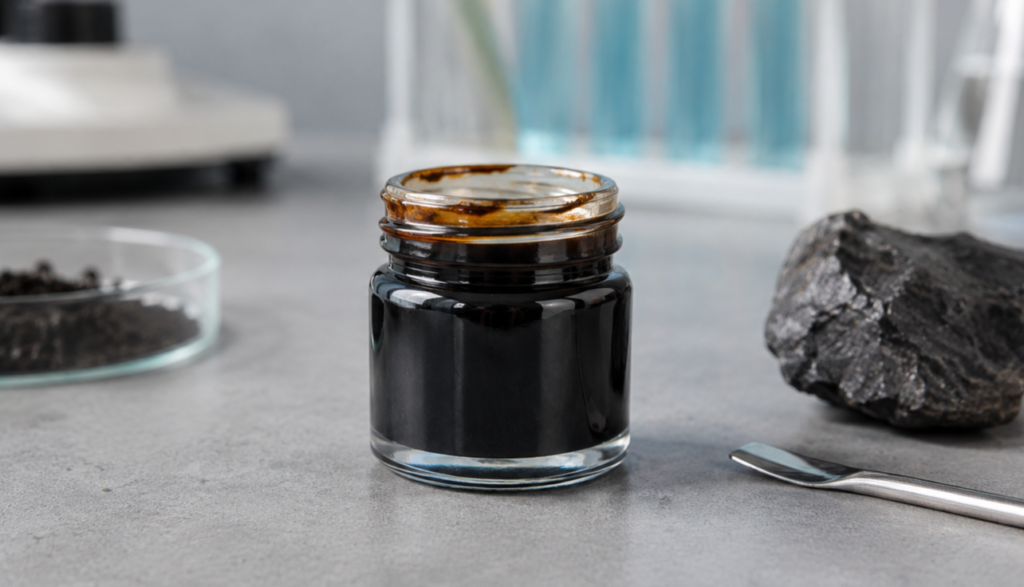
The Geological Timeline In Shilajit, fulvic acid is not manufactured. It is the product of millions of years of plant decomposition, geological compression, and microbial activity in Himalayan rock. The result is a concentration of fulvic acid and ionic minerals that no synthetic supplement can replicate in either structure or purity. |
How Fulvic Acid Works at the Cellular Level
When you ingest a mineral — magnesium, zinc, iron — the first challenge is getting it from the digestive tract into the bloodstream, and then from the bloodstream into cells. Each step has a different absorption barrier, and most minerals are lost at one or both of them.
Fulvic acid solves both problems. At the gut level, it chelates ionic minerals — binds to them, forming a complex that the intestinal membrane can transport actively. At the cell membrane level, fulvic acid enhances permeability and acts as an electron shuttle, which is also involved in cellular energy production.
The result is not just better absorption. It is delivery of minerals in the exact form cells use directly — ionic, electrically charged, and biologically active — without the digestive conversion step that most mineral supplements rely on.
Why This Is Different From Standard Supplements Magnesium oxide: ~4% bioavailability. Requires stomach acid to dissolve, then gut enzymes to process. Most is excreted. Magnesium glycinate: ~30-40% bioavailability. Better than oxide, but still dependent on active transport mechanisms. Ionic magnesium via fulvic acid: Delivered in the form cells directly absorb. No conversion step required. Bioavailability is fundamentally different in mechanism, not just percentage. |
Why Standard Mineral Supplements Fail Without It
The supplement industry’s dominant problem is form. Most minerals are sold in their cheapest form: oxides, carbonates, and sulphates. These forms are stable for shelf purposes but biologically inferior because they require significant digestive processing before becoming bioavailable.
Zinc oxide, for example, must be converted by stomach acid to zinc chloride, then actively transported by specific zinc transporter proteins in the intestinal wall. Each step has efficiency losses. In a person with low stomach acid (very common over 40), the first step is already compromised.
Fulvic acid bypasses this entire pathway. The mineral arrives at the gut wall already in its bioavailable ionic form, bound to a carrier that the gut membrane recognises and transports actively. The efficiency difference is not marginal.
Fulvic Acid in Shilajit vs Isolated Fulvic Acid Supplements
Isolated fulvic acid supplements are widely available. They are typically derived from leonardite (a form of brown coal) or from leonardite-adjacent soil deposits. The fulvic acid content is often genuine, but it comes without the co-factors — the ionic mineral matrix — that make it biologically significant in Shilajit.
Shilajit’s fulvic acid content (95.2% in Penantia’s resin, lab-certified) exists alongside over 80 ionic trace minerals in the exact ratios and forms that the geological compression process created over millions of years. The minerals and the transport mechanism arrive together — which is why the effect of whole Shilajit resin differs from isolated fulvic acid.
The Scientific Evidence
Fulvic acid’s role in mineral transport is documented in the biochemistry literature. Key areas of research include:
- Chelation and mineral bioavailability: Studies show fulvic acid increases iron absorption in iron-deficient models by acting as a chelating agent that protects iron from precipitation in alkaline intestinal environments.
- Mitochondrial function: Fulvic acid has been shown to act as an electron shuttle in cellular respiration, supporting ATP production independent of its mineral transport role.
- Anti-inflammatory activity: Multiple studies document fulvic acid’s ability to modulate the NF-kB pathway — the master switch for inflammatory gene expression.
For the full Penantia product specification, visit Pure Himalayan Shilajit Resin (20g) which contains 95.2% certified fulvic acid.
Frequently Asked Questions
Is fulvic acid safe to take daily?
Fulvic acid from purified, tested sources is safe for daily use. The key risk in unregulated fulvic acid products is heavy metal contamination from the geological sources. Penantia’s Shilajit is batch-tested by Australian laboratories for heavy metals and released only with a passing certificate of analysis.
Can fulvic acid be taken alongside medication?
Fulvic acid can affect the absorption and metabolism of some medications — particularly thyroid medications and certain antibiotics. If you are on prescription medication, consult your doctor before beginning Shilajit supplementation. A 2-hour separation window between Shilajit and medication is typically sufficient.