The global market for Shilajit has grown dramatically in the past decade. With that growth has come a flood of products that range from legitimate to fraudulent — powders, capsules, liquids, and resins that vary enormously in purity, mineral content, and biological activity. Understanding what makes Himalayan Shilajit genuinely different begins with understanding how it forms.
Table of Contents
- How Shilajit Forms: The Geological Process
- Why Altitude Determines Quality
- The Ladakh Difference
- Purification: Why Raw Shilajit Is Dangerous
- How to Identify Authentic Shilajit
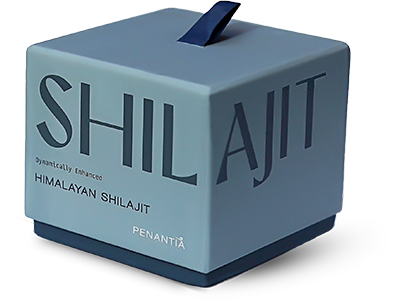
- Penantia’s Sourcing and Quality Standards
- Frequently Asked Questions
How Shilajit Forms: The Geological Process
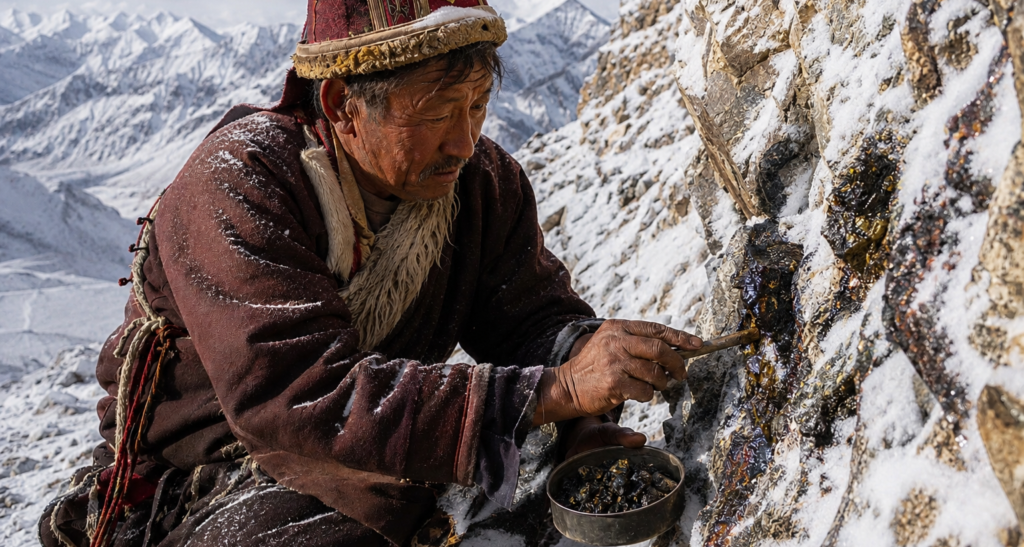
Shilajit is not mined in the conventional sense. It is collected from rock faces in high-altitude mountain ranges — primarily the Himalayas, Altai, and Caucasus ranges — where it seeps out of rock crevices in warm months. This seepage is the result of a geological process spanning millions of years.
The process begins with plant matter — compressed layers of organic material from ancient forests — being subjected to geological pressure and temperature changes. Over millions of years, microbial action and geochemical processes transform this organic matter into humic substances, including the fulvic acid complex that defines Shilajit’s biological activity. The minerals present in the rock matrix are incorporated into this complex in ionic form — the form that makes them biologically available.
Why This Cannot Be Replicated Manufacturers can isolate fulvic acid from leonardite (surface-level coal deposits) and mix it with mineral salts. This is not Shilajit. Authentic Himalayan Shilajit contains a specific matrix of ionic minerals and organic compounds created by a specific geological process over a specific timeframe. The matrix cannot be reproduced synthetically. |
Why Altitude Determines Quality
Shilajit sourced from higher altitudes consistently shows higher fulvic acid content and greater mineral diversity. The explanation is geological: at extreme altitudes (above 3,000 metres), the rock formations are older, the organic matter is more compressed, and the geochemical environment produces more concentrated humic substances.
At 15,000 feet (4,500+ metres), where Penantia’s Shilajit is harvested, the rock formations in Ladakh’s Himalayan range are among the oldest on the subcontinent. The mineral profile of Shilajit from these formations reflects that geological age: over 80 trace minerals in ionic form, with a fulvic acid concentration of 95.2% — lab-certified per batch.
The Ladakh Difference
Ladakh, in the northernmost territory of India, is consistently cited in the scientific literature as producing Shilajit with the highest bioactive compound concentration. The region’s extreme altitude, arid climate, and ancient geological formations create conditions that produce an exceptionally pure and potent resin.
Penantia’s sourcing partners in Ladakh are small-scale ethical harvesters who collect Shilajit from specific rock formations using traditional methods. The harvesting is seasonal — collected in the warmest months when the resin becomes fluid and seeps naturally from the rock. No blasting, no industrial extraction. The ecological footprint is minimal by design.
Cognitive and Neurological Symptoms
Raw Shilajit collected from rock faces contains heavy metals, mycotoxins (fungal toxins), and other contaminants from the geological environment. It cannot be consumed in its raw state. Purification is not optional — it is the difference between a therapeutic supplement and a toxic substance.
Penantia uses a two-stage purification process:
- Triphala gravity sedimentation: Triphala — an Ayurvedic botanical compound — is used to initiate gravity sedimentation, allowing coarse residues and heavy particles to settle out of the solution. This is Ayurveda’s gold-standard purification method for Shilajit, documented in traditional pharmacopoeia.
- 0.2 micron membrane filtration: A clinical-grade process that removes microbes and nano-sized heavy metal particles. This is the same filtration standard used in pharmaceutical manufacturing and hospital-grade water purification.
How to Identify Authentic Shilajit
- Solubility test: Authentic resin Shilajit dissolves completely in warm water within 60 seconds, producing a dark amber liquid. Fakes often leave residue or dissolve incompletely.
- COA (Certificate of Analysis): Any legitimate Shilajit supplier should provide a third-party laboratory certificate of analysis confirming fulvic acid content and heavy metal testing. Ask for it. If they cannot provide it, do not buy.
- Form: Authentic Himalayan Shilajit is a resin. Powders and capsules may contain Shilajit extract but with significantly reduced bioavailability. Some contain no Shilajit at all.
- Smell and texture: Authentic resin has a distinct mineral, slightly bituminous smell and is firm at room temperature, becoming pliable when warmed by hand.
Penantia's Sourcing and Quality Standards
- Hand-harvested at 15,000ft in Ladakh, India
- Triphala gravity sedimentation purification
- 0.2 micron membrane filtration
- Solar heat extraction — preserves delicate fulvic acid chains
- Batch-tested by accredited Australian laboratories
- Certificate of Analysis available on request for every batch
- Heavy metal free, mycotoxin free, no additives or fillers
Frequently Asked Questions
Is there a difference between Himalayan, Altai, and Tibetan Shilajit?
Yes. Shilajit from different mountain ranges varies in mineral profile, fulvic acid concentration, and purity. Himalayan Shilajit — particularly from Ladakh — consistently tests highest for fulvic acid content and bioactive mineral concentration in independent studies. Altai Shilajit is also legitimate but typically shows lower fulvic acid percentages.
How can I tell if Penantia's Shilajit is genuine?
Every batch of Penantia Shilajit is tested by accredited Australian laboratories. A Certificate of Analysis is available on request — simply contact us at support@penantia.com with your batch number.